

In today’s fast-paced and high-stress work environment, it’s more important than ever for businesses to prioritize the health and wellness of their employees.
Not only does promoting health and wellness lead to happier, more engaged employees, but it can also result in increased productivity and reduced healthcare costs.
 Key Takeaways
- Prioritizing health and wellness in the workplace can lead to increased productivity and employee satisfaction.
- Encouraging physical activity, healthy eating habits, and stress management can have a positive impact on overall well-being.
- Offering wellness programs and resources can be a cost-effective way to improve employee health and morale
- Creating a culture of wellness starts from the top down with leadership setting an example and promoting healthy habits.
- Regularly evaluating and adjusting wellness initiatives can ensure their effectiveness and relevance to employees' needs.
This article is about integrating health and wellness into businesses to promote happier, more engaged employees, increased productivity, and reduced healthcare costs.
It provides practical ideas that employers can implement to prioritize employee well-being.
 Table of Contents
To get the most out of this article, consider which ideas would work best for your business and start implementing them.
Remember that investing in your employees’ health can lead to significant benefits for both the company and its workers.
Additionally, don’t be afraid to seek input from employees on what types of wellness programs or initiatives they would find most beneficial.
What is the Difference Between Health and Wellness?
When it comes to maintaining a healthy lifestyle, it’s important to understand the difference between health and wellness.
While the terms are often used interchangeably, they actually refer to different aspects of overall well-being.
Health
Health is typically defined as the absence of illness or disease.
It refers to the physical state of the body and its ability to function properly.
This includes everything from cardiovascular health to immune system function.
In order to maintain good health, it’s important to engage in regular exercise, eat a balanced diet, get enough sleep, and avoid harmful habits like smoking and excessive drinking.
Wellness
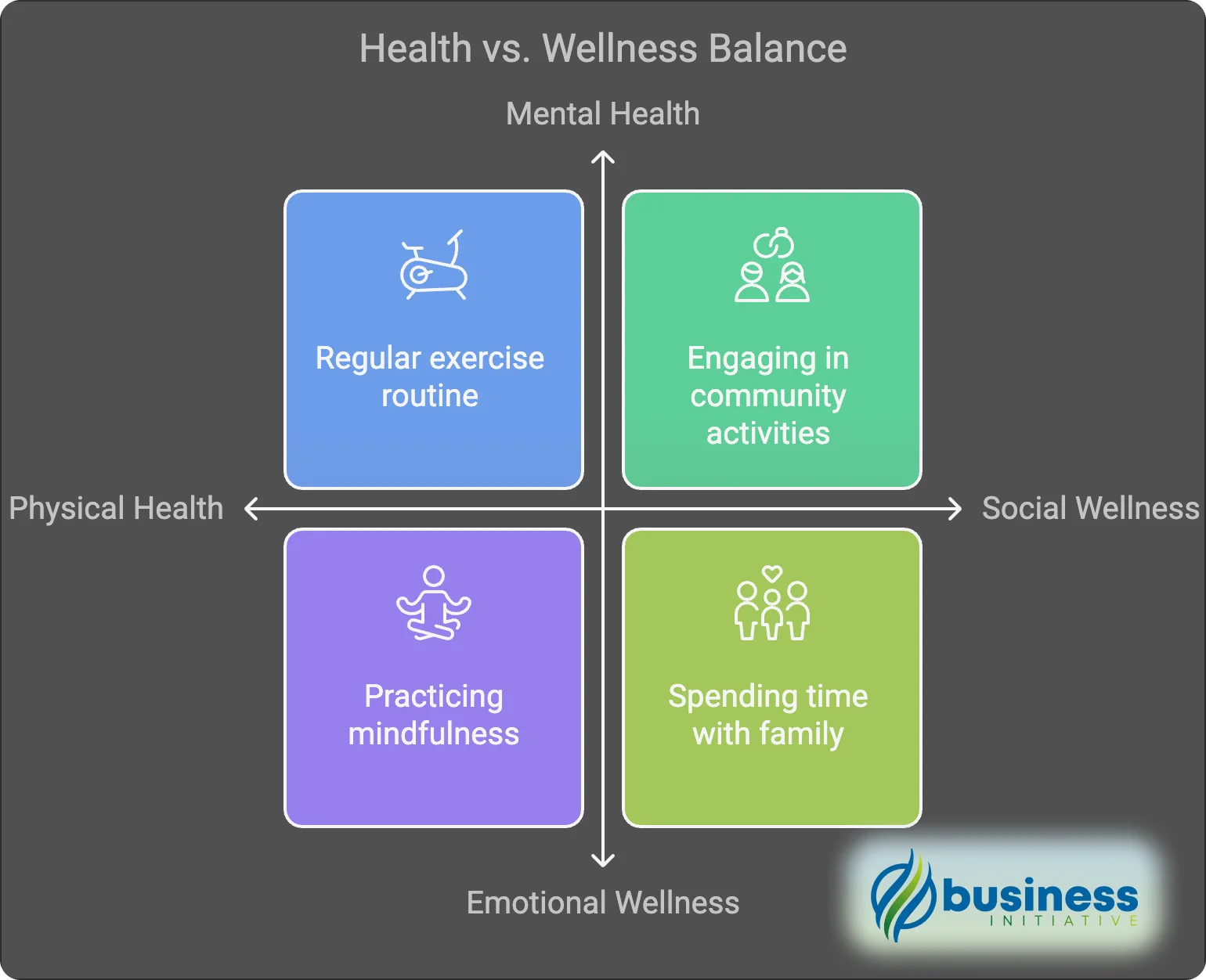
Wellness, on the other hand, encompasses a broader range of factors that contribute to overall well-being.
It includes not just physical health, but also mental, emotional, and social health.
Wellness is about achieving a state of balance and harmony in all aspects of life.
This might involve things like stress reduction techniques, mindfulness practices, engaging in hobbies and interests, and building strong relationships with friends and family.
In short, while health refers mainly to physical well-being, wellness encompasses a more holistic approach to achieving overall well-being.
By focusing on both health and wellness, individuals can create a lifestyle that supports their long-term health and happiness.
The Benefits of Employee Health and Wellness Programs
Prioritizing health and wellness in the workplace can lead to a range of benefits for both employers and employees, including:
- Increased employee engagement, productivity, and loyalty
- Reduced healthcare costs
- Lower rates of absenteeism
- Higher levels of employee retention
- Improved overall well-being through physical activity, healthy eating habits, and stress management techniques
- Reduced stress levels and improved mental clarity among employees through wellness programs such as yoga classes or meditation sessions
- Attracting top talent by demonstrating a commitment to employee well-being
By setting an example and taking part in wellness initiatives, leaders can create a culture of wellness that has a significant positive impact on both individuals and the business as a whole.
Why is Health and Wellness so Important?
A growing body of research suggests that investing in employee health and wellness can have significant benefits for businesses.
According to a study by the Centers for Disease Control and Prevention, productivity losses related to personal and family health problems cost U.S. employers $1,685 per employee per year, or $225.8 billion annually.
Another study found that companies with effective health and wellness programs have 11% higher revenue per employee than those that don’t prioritize employee well-being.
Investing in your employees’ health can also lead to significant healthcare savings.
For instance, Johnson & Johnson found that its corporate wellness program saved the company $250 million on healthcare costs over a decade.
For example, a study published by the Journal of Occupational and Environmental Medicine found that companies with comprehensive wellness programs experienced an average of 25% fewer sick days than those without such programs.
Another study conducted by the International Labour Organization showed that workplace stress costs American businesses up to $300 billion annually in lost productivity and healthcare expenses.
Moreover, research from the World Health Organization suggests that for every dollar invested in employee wellness, businesses can see a return on investment of up to six dollars in reduced healthcare costs, absenteeism, and turnover.
Simple Ways to Apply Health and Wellness Principles and Strategies in Your Business
Integrating health and wellness into your business doesn’t have to be a daunting task.
There are many simple and effective ways that employers can promote employee well-being without breaking the bank or disrupting daily operations.
In this section, we’ll explore some practical ideas for incorporating health and wellness principles and strategies into your business.
From small changes like providing healthy snacks in the break room to larger initiatives like offering on-site fitness classes, these ideas can help create a culture of wellness that benefits both employees and the company as a whole.
Here are 15 practical ideas for integrating health and wellness into your business:
In today’s fast-paced world, it’s important for businesses to prioritize the health and wellness of their employees and clients.
Here are the 15 ways that businesses can integrate health and wellness into their operations:
1. Offer healthy food options in the workplace
Providing healthy food options at work is a simple yet effective way to promote wellness.
A study by the American Heart Association found that employees who have access to healthy foods at work are more likely to eat healthier overall.
Companies like Zesty offer catering services that specialize in healthy meals for businesses.
2. Start a subscription box service
Subscription boxes are a popular way for consumers to discover new products and maintain their wellness journey.
Companies like FabFitFun and Causebox curate boxes filled with health and wellness products that cater to specific interests or dietary preferences.
3. Develop a line of healthy products
Creating your own line of health-related products is a great way to align your brand values with your customers’ wellness goals.
Companies like Goop offer a range of health-related products, from supplements to skincare, that promote overall well-being.
4. Launch virtual fitness classes
Virtual fitness classes are a convenient way for clients to stay active from the comfort of their own homes.
With the rise of COVID-19 restrictions, demand for online workouts has increased significantly.
Companies like Peloton offer virtual fitness classes led by certified instructors.
5. Encourage physical activity
Encouraging physical activity during the workday can improve employee productivity and overall well-being.
Companies like ClassPass offer access to various fitness classes at different studios across the country, while others like Varidesk provide standing desks or treadmill desks as alternatives to traditional seating.
6. Offer personalized wellness coaching
Personalized wellness coaching can help clients set and achieve their health goals through tailored advice on nutrition, exercise, sleep, and stress management.
Companies like Noom offer personalized coaching and support to help users achieve their weight loss goals.
7. Offer wellness workshops or seminars
Organizing workshops or seminars that educate clients on various health and wellness topics can help position your business as an authority in the industry and attract more customers.
Companies like Headspace offer guided meditations for stress reduction and mindfulness.
8. Promote mental health and stress reduction
Mental health is just as important as physical health, and promoting stress reduction techniques like mindfulness meditation or yoga can improve overall well-being.
Companies like Ginger offer mental health resources and support, such as an employee assistance program or counseling services.
9. Utilize technology to enhance client experience
Integrating fitness tracking apps or wearable devices into your business model can help clients monitor their progress and stay motivated.
Companies like MyFitnessPal offer personalized recommendations based on data insights to improve customer satisfaction and results.
10. Create a culture of wellness
Creating a culture of wellness involves promoting healthy habits like taking breaks to stretch or walk around, as well as recognizing and rewarding employees who prioritize their health and wellness.
Companies like Google have implemented wellness programs that encourage employees to prioritize their physical and mental well-being.
11. Create corporate wellness programs
Developing customized workplace wellness solutions tailored for businesses can improve employee well-being and productivity.
Companies like Wellable offer services such as on-site fitness classes, stress management workshops, or healthy meal planning consultations.
12. Partner with local healthcare providers
Collaborating with healthcare professionals like nutritionists, personal trainers, or mental health therapists can offer integrated wellness packages catering to different client needs.
Companies like Humana have partnered with healthcare providers to offer holistic wellness programs for employees.
13. Create a health-focused blog or podcast
Sharing valuable information and tips related to health and wellness through a blog or podcast can help build an audience, establish credibility, and potentially generate additional revenue through sponsorships or affiliate marketing.
Companies like The Wellness Mama offer a health-focused blog that covers topics ranging from nutrition to natural remedies.
14. Lead by example
Leading by example when it comes to health and wellness is key.
Prioritizing healthy habits like taking breaks to exercise or meditate, eating healthy meals, and encouraging employees to do the same can improve overall well-being.
Companies like Apple CEO Tim Cook have been known to prioritize their physical and mental well-being.
15. Incorporate wellness services into existing offerings
If you already run a service-based business like a spa or salon, adding complementary wellness services such as massage therapy, acupuncture, or aromatherapy can expand your offerings and attract new clientele.
Companies like Massage Envy offer a range of wellness services in addition to traditional spa treatments.
By prioritizing health and wellness, businesses can improve employee productivity, attract more customers, and establish themselves as leaders in the industry.
Health and Wellness Companies
There are a growing number of companies that specialize in health and wellness, offering various products and services to help individuals achieve their health goals.
The emergence of these companies in recent years demonstrates the increasing demand for health and wellness products and services.
As more individuals prioritize their health, it’s likely that we’ll see continued growth in this industry.
A few of the most prominent and up-and-coming companies in the world of health and wellness include:
- Peloton: A company that offers connected fitness equipment, including stationary bikes, treadmills, and other fitness accessories.
- Headspace: A meditation app that provides guided meditations for stress reduction and mindfulness.
- Thrive Market: An online marketplace that offers healthy food options at discounted prices.
- Noom: A weight loss app that provides personalized coaching and support to help users achieve their weight loss goals.
- ClassPass: A subscription service that gives users access to various fitness classes at different studios across the country.
These companies offer various products and services that can help entrepreneurs integrate health and wellness into their businesses.
By prioritizing employee well-being, businesses can expect happier, more engaged workers, increased productivity, and reduced healthcare costs.
In Summary…
Entrepreneurs can prioritize health and wellness in their workplace by:
1. Encouraging healthy habits
2. Offering wellness programs
3. Creating a culture of wellness from the top down
4. Regularly evaluating their initiatives for effectiveness
Integrating health and wellness into a business is beneficial for both the employer and employees.
By prioritizing employee well-being, businesses can expect:
1. Happier, more engaged workers
2. Increased productivity
3. Reduced healthcare costs
To practically apply this information, consider which ideas would work best for your business and start implementing them.
It’s important to seek input from employees on what types of wellness programs or initiatives they would find most beneficial.
Additionally, creating a culture of wellness that recognizes and rewards healthy habits can go a long way in promoting employee well-being.
Prioritizing health and wellness in the workplace can create a happier, healthier, and more productive workforce.
By incorporating practical ideas into your business venture, you can effectively tap into the thriving health and wellness industry while promoting healthier lifestyles for your clientele.
The possibilities are endless when it comes to integrating health and wellness into your business.
If you’re interested in learning more about how to integrate health and wellness into your business, schedule a consultation call with Business Initiative or use our contact form today!
Don’t forget to sign up for our newsletter and follow us on Twitter for more practical tips on how to promote health and wellness in the workplace.
FAQs - Frequently Asked Questions About 15 Practical Employee Wellness Programs | Employees in the Workplace

What is the difference between health and wellness in a business context?
Health refers to the absence of illness and physical well-being, while wellness encompasses a broader holistic approach including mental, emotional, and social well-being.
Learn More...
Health is typically defined as the physical state of the body and its ability to function properly, including cardiovascular health and immune system function.
Wellness goes beyond physical health to include mental clarity, emotional balance, stress management, and strong social relationships.
In the workplace, health programs might focus on exercise and nutrition, while wellness programs also address mindfulness, stress reduction, and work-life balance.
Effective business programs address both health and wellness to create a truly supportive environment for employees.
What measurable benefits do employee wellness programs provide to businesses?
Companies with effective wellness programs see 11% higher revenue per employee, 25% fewer sick days, and up to a 6-to-1 return on investment.
Learn More...
According to Harvard Business Review research, companies with effective health and wellness programs generate 11% higher revenue per employee than those without.
The Journal of Occupational and Environmental Medicine found that comprehensive wellness programs result in an average of 25% fewer sick days.
The WHO suggests businesses see up to a $6 return for every $1 invested in employee wellness through reduced healthcare costs, absenteeism, and turnover.
Johnson and Johnson reported saving $250 million on healthcare costs over a decade through their corporate wellness program.
What are the most practical and affordable wellness initiatives a small business can implement?
Offer healthy food options in the break room, encourage physical activity breaks during the workday, and promote mental health through stress reduction techniques.
Learn More...
Provide healthy snacks and food options in the workplace. Studies show employees with access to healthy foods eat healthier overall.
Encourage physical activity through standing desks, walking meetings, or subsidized fitness class memberships through services like ClassPass.
Promote mental health with stress reduction techniques like guided meditation sessions through apps like Headspace.
Create a culture of wellness by having leadership model healthy habits and recognizing employees who prioritize well-being.
How can businesses integrate wellness without disrupting daily operations?
Start with small changes like healthy snacks, flexible break times for movement, and optional lunch-hour workshops that do not interrupt workflow.
Learn More...
Offer virtual fitness classes that employees can attend on their own schedule, similar to Peloton's on-demand approach.
Provide wellness workshops or seminars during lunch breaks or optional after-hours sessions on topics like nutrition and stress management.
Utilize technology like fitness tracking apps and wearable devices that employees can use independently without disrupting work.
Partner with local healthcare providers to offer integrated wellness packages employees can access outside of work hours.
How does leadership involvement impact the success of workplace wellness programs?
Leadership sets the tone. When leaders actively participate in wellness initiatives and model healthy habits, employee participation and program effectiveness increase significantly.
Learn More...
Creating a culture of wellness starts from the top down. Leaders who take breaks to exercise, eat healthy meals, and manage stress visibly give employees permission to do the same.
Companies like Apple have leaders known for prioritizing physical and mental well-being, which signals that wellness is a company value.
Leaders who recognize and reward employees who prioritize wellness reinforce the behavior across the organization.
Without leadership buy-in, wellness programs often have low participation and minimal impact on employee well-being.
What types of wellness services can service-based businesses add to expand their offerings?
Service businesses like spas or salons can add complementary offerings such as massage therapy, acupuncture, aromatherapy, and personalized wellness coaching.
Learn More...
Businesses already in the service industry can naturally expand into wellness. Spas can add massage therapy and aromatherapy.
Subscription box services curating health and wellness products, similar to FabFitFun, offer another revenue stream.
Developing a proprietary line of health-related products like supplements or skincare, similar to Goop, aligns brand values with customer wellness goals.
Creating health-focused content through blogs or podcasts builds audience, establishes credibility, and generates revenue through sponsorships.
How should businesses evaluate and adjust their wellness programs over time?
Regularly survey employees about program effectiveness, track participation rates and health metrics, and adjust initiatives based on feedback and data.
Learn More...
Seek regular input from employees on what types of wellness programs or initiatives they find most beneficial.
Track measurable outcomes like participation rates, sick day usage, employee retention, and healthcare cost trends.
Compare results against industry benchmarks. The CDC reports productivity losses of $1,685 per employee per year from health problems.
Be willing to discontinue programs with low engagement and replace them with initiatives employees actually want and use.
Sources
- Zesty
- FabFitFun
- Causebox
- Goop
- Peloton
- ClassPass
- Varidesk
- Noom
- Headspace
- Ginger
- MyFitnessPal
- Google Wellbeing
- Wellable
- Humana
- Massage Envy
- CDC Workplace Health Promotion Resources
- HBR: What's the Hard Return on Employee Wellness Programs?
- Journal of Occupational and Environmental Medicine: Comprehensive Worksite Health Promotion and Health Protection Programs: Rationale and Overview of a National Framework for Health Protection/Prevention with an Example From NASA
- ILO: Workplace Health Promotion: What is it?
- WHO Fact Sheet: Workplace Health Promotion