


As your LLC grows and evolves, you might find yourself considering a transition to a corporate structure.
Converting an LLC to a corporation is a significant decision that can offer new opportunities for growth, investment, and organizational structure.
This comprehensive guide will walk you through the conversion process, explain the benefits and potential challenges, and provide practical steps to ensure a successful transition.
 Key Takeaways
- Access to capital: Corporations can issue stock and are more attractive to venture capital and institutional investors.
- Plan carefully: Consult with legal and tax professionals before beginning the conversion process.
- Follow legal steps: Obtain member approval, file conversion documents, draft bylaws, and update all registrations.
- Understand tax implications: The conversion may have tax consequences that require careful planning.
- Maintain continuity: Ensure business operations continue smoothly during the transition process.
 Table of Contents
Why Convert from LLC to Corporation?
There are several compelling reasons why businesses choose to convert from an LLC to a corporation:
1. Access to Capital
Corporations have significant advantages when it comes to raising capital:
- Ability to issue different classes of stock
- Easier to attract venture capital investment
- Can go public through an IPO
- More appealing to institutional investors
2. Enhanced Credibility
A corporate structure often provides:
- Greater perceived stability
- Enhanced professional image
- Increased trust from larger business partners
- More attractive to potential investors
3. Ownership Flexibility
Corporations offer more sophisticated ownership structures:
- Multiple classes of stock (common and preferred)
- Employee stock options
- More straightforward ownership transfer
- Better succession planning options
4. Tax Benefits
While tax implications vary, corporations can offer:
- More deductible expenses
- Better retirement and benefit planning options
- Strategic tax planning opportunities
- International tax advantages
5. Clear Management Structure
Corporations provide:
- Well-defined roles and responsibilities
- Established governance framework
- Clear separation of ownership and management
- Professional management opportunities
Legal Steps for Conversion
Converting an LLC to a corporation involves several key steps:
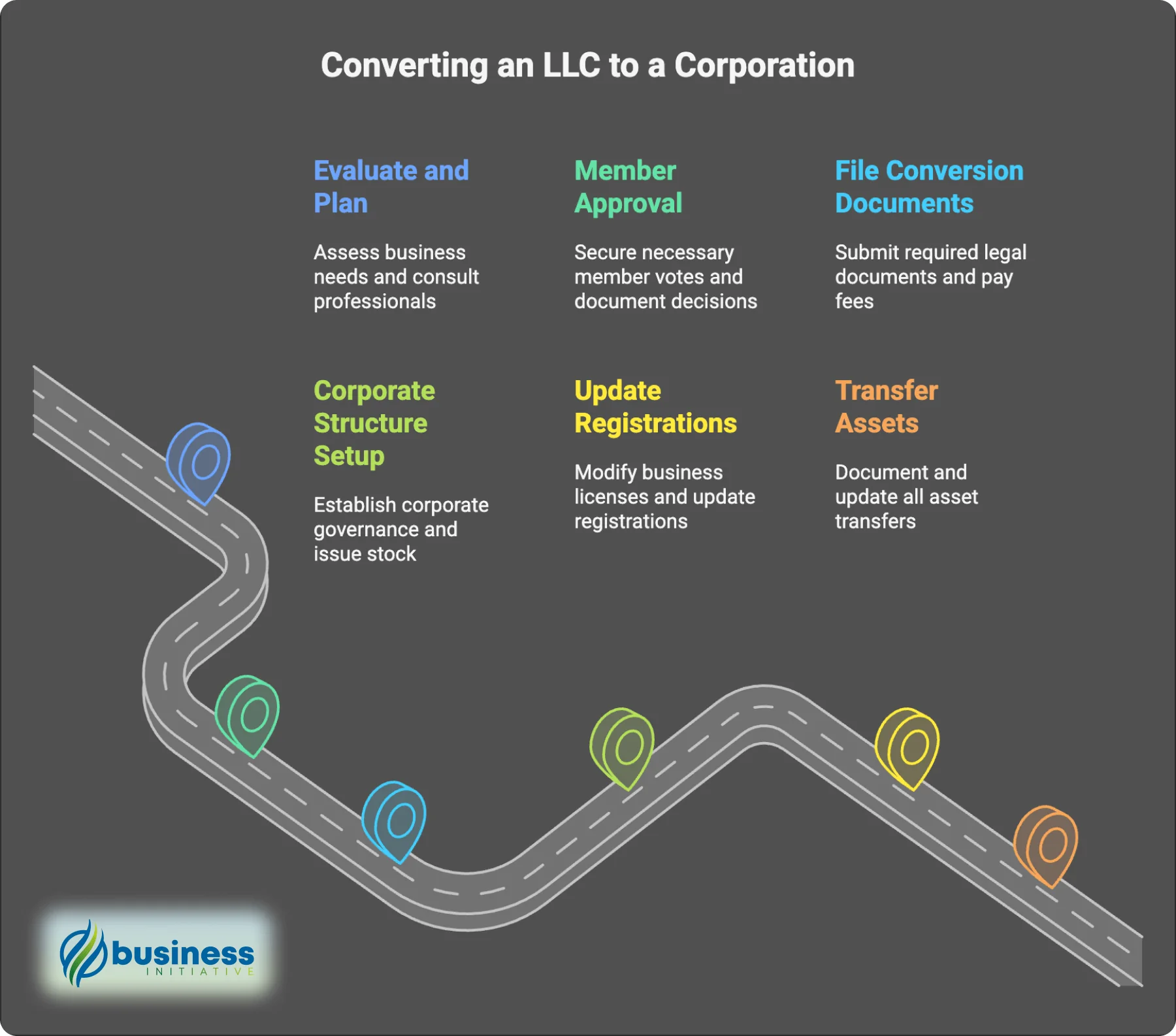
1. Evaluate and Plan
Before beginning the conversion:
- Assess your business’s current financial situation
- Consult with legal and tax professionals
- Review existing contracts and agreements
- Plan the timing of the conversion
2. Member Approval
Secure necessary approvals:
- Review LLC operating agreement for conversion requirements
- Obtain member votes as required
- Document all decisions and approvals
- Address any member concerns or objections
3. File Conversion Documents
Submit required documentation:
- File articles of incorporation
- Create corporate bylaws that match corporate bylaws requirements after converting to a corporation
- Establish board of directors
- File state-specific conversion forms
- Pay required filing fees
4. Corporate Structure Setup
Establish your corporate framework:
- Issue stock certificates
- Set up corporate records
- Create shareholder agreements
- Establish board meeting procedures
- Document initial corporate resolutions
5. Update Registrations
Update business information:
- Obtain new EIN (if required)
- Update business licenses and permits
- Modify insurance policies
- Update bank accounts and credit cards
- Register in other states if doing business there
6. Transfer Assets
Properly transfer LLC assets:
- Document all asset transfers
- Update property titles
- Transfer contracts and agreements
- Maintain detailed records for tax purposes
- Update intellectual property registrations
Tax Implications
Converting to a corporation has significant tax considerations—then apply corporate tax strategies after converting to a corporation once the new structure is live.
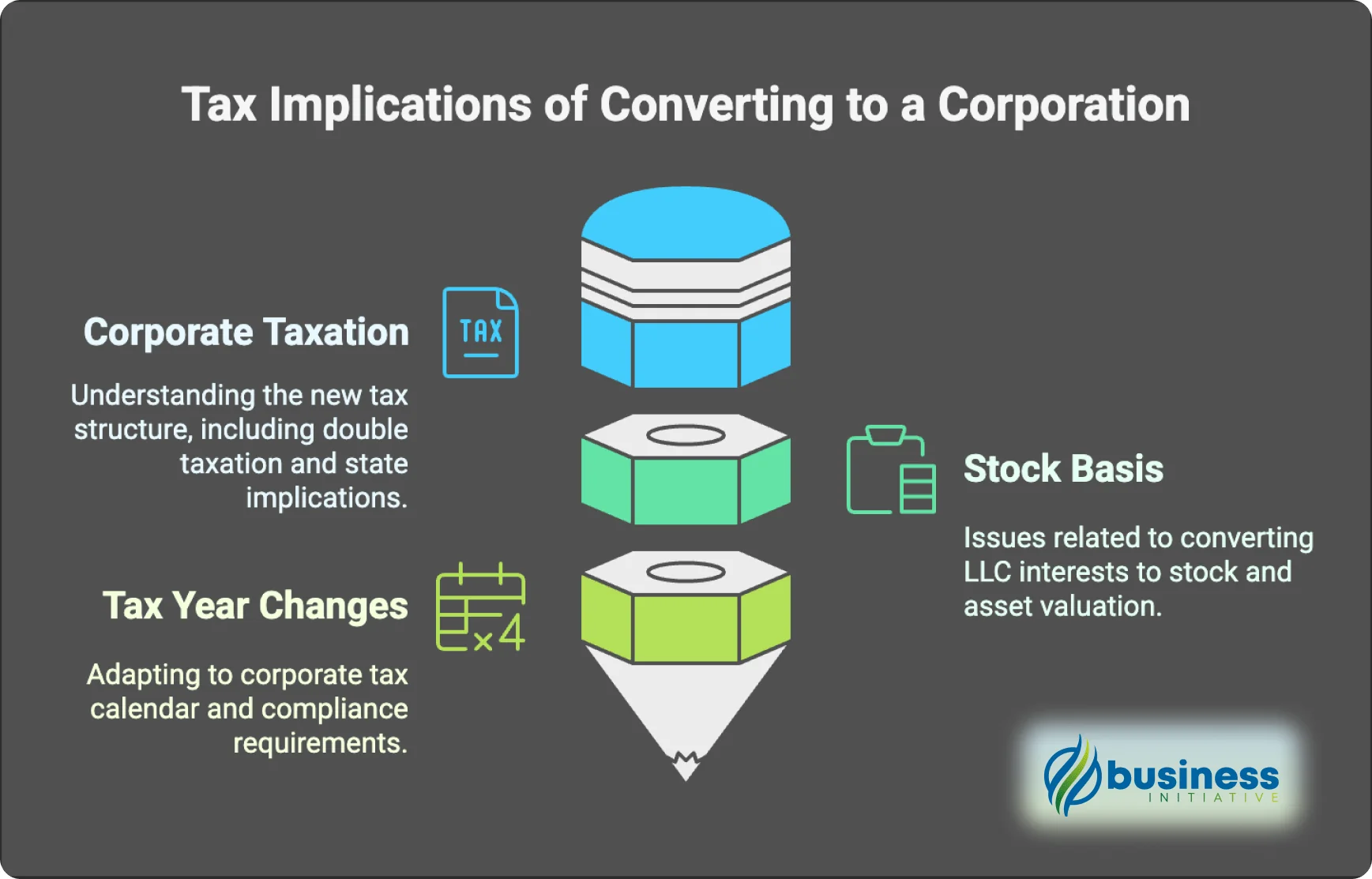
1. Corporate Taxation
Understand the new tax structure:
- Double taxation for C-corporations
- S-corporation election possibilities
- State tax implications
- International tax considerations
2. Stock Basis
Consider stock basis issues:
- Converting LLC interests to stock
- Valuation of transferred assets
- Impact on member/shareholder basis
- Future tax implications
3. Tax Year Changes
Adapt to new requirements:
- Corporate tax calendar
- Quarterly estimated payments
- Payroll tax obligations
- State tax compliance
Practical Tips for Success
Follow these guidelines for a smooth conversion:
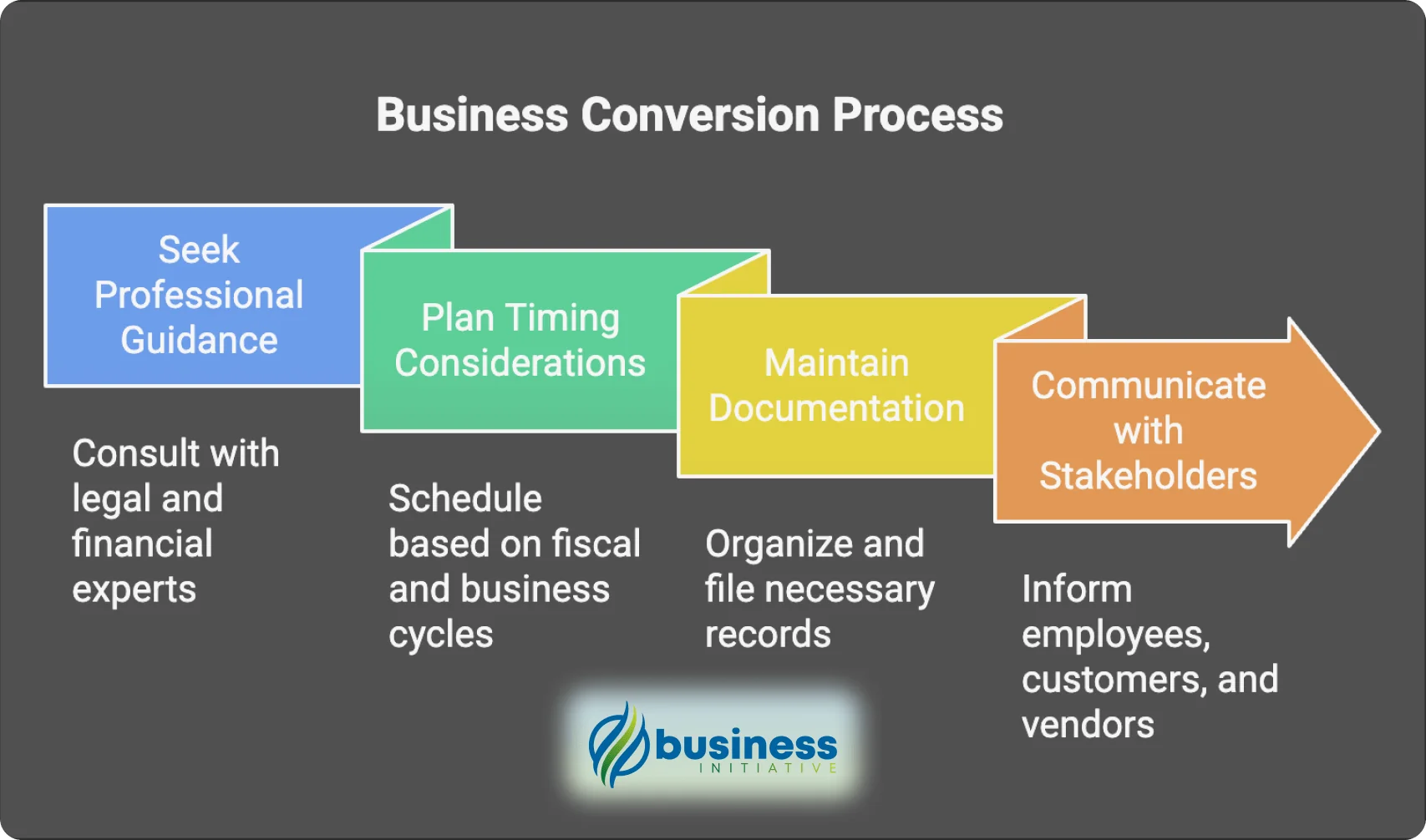
1. Professional Guidance
Seek expert assistance:
- Corporate attorney consultation
- Tax advisor guidance
- Business valuation expert
- Professional accountant review
2. Timing Considerations
Plan the conversion timing:
- Fiscal year end implications
- Tax filing deadlines
- Business cycle impact
- State filing requirements
3. Documentation
Maintain thorough records:
- Conversion documents
- Asset transfer records
- Member/shareholder agreements
- Corporate governance documents
4. Communication
Keep stakeholders informed:
- Employee communications
- Customer notifications
- Vendor updates
- Banking relationship changes
Common Challenges
Be prepared for potential hurdles:
1. Complexity
Navigate complex issues:
- Legal requirements
- Tax implications
- Administrative burden
- Compliance obligations
2. Cost Considerations
Budget for expenses:
- Legal fees
- Filing costs
- Professional services
- Administrative changes
3. Operational Changes
Adapt to new requirements:
- Corporate formalities
- Record-keeping obligations
- Meeting requirements
-
Reporting obligations
Why would I convert my LLC to a corporation?
You might convert for better access to capital, enhanced credibility, ownership flexibility, potential tax benefits, and a clearer management structure.
Learn More...
Corporations can issue different classes of stock and are more attractive to venture capital and institutional investors.
A corporate structure often provides greater perceived stability and enhanced professional image.
Corporations offer sophisticated ownership structures like stock options and easier ownership transfer.
The conversion can provide strategic tax planning opportunities and international tax advantages.
What are the legal steps to convert an LLC to a corporation?
Key steps include evaluating and planning, obtaining member approval, filing conversion documents, drafting corporate bylaws, and updating business registrations.
Learn More...
Start by assessing your business's financial situation and consulting with legal and tax professionals.
Review your LLC operating agreement for conversion requirements and obtain necessary member votes.
File articles of conversion or new articles of incorporation with your state.
Draft corporate bylaws, issue stock certificates, and update all business registrations and licenses.
What are the tax implications of converting an LLC to a corporation?
Tax implications include potential asset transfers, built-in gains taxes, changes in pass-through vs. corporate taxation, and payroll tax obligations.
Learn More...
The conversion may be treated as a taxable event depending on how it's structured.
You'll transition from pass-through taxation to corporate taxation (unless you elect S-corp status).
Consult with a tax professional to understand the specific implications for your business.
Proper planning can help minimize tax liability during the transition.
What are common challenges when converting an LLC to a corporation?
Common challenges include administrative complexity, maintaining business continuity, regulatory compliance, and managing stakeholder expectations.
Learn More...
The conversion process involves significant paperwork and legal requirements.
You must ensure business operations continue smoothly during the transition.
Compliance with both LLC dissolution and corporation formation requirements is essential.
Communication with employees, customers, and partners helps manage expectations.
How long does it take to convert an LLC to a corporation?
The conversion process typically takes 2-4 weeks, depending on state requirements and the complexity of your business.
Learn More...
Filing processing times vary by state, from a few days to several weeks.
Complex businesses with multiple stakeholders or contracts may require more time.
Expedited filing options are available in most states for an additional fee.
Allow extra time for updating all registrations, contracts, and business accounts.
In Summary…
Converting your LLC to a corporation is a significant step that requires careful planning and execution.
While the process can be complex, the potential benefits of enhanced credibility, easier access to capital, and more sophisticated ownership structures make it an attractive option for growing businesses.
By following the steps outlined in this guide and working with qualified professionals, you can ensure a successful transition that positions your business for future growth and success.
Ready to take your business to the next level?
Schedule a consultation with our experts today!