

What if you could predict which states will experience the strongest economic growth—and position your business in expanding markets before they become saturated? This forecasting tool uses advanced analytics on BEA data to project future economic performance, helping you plan for economic cycles and identify states with strong growth prospects.
The data shows that states with consistent 3%+ quarterly growth patterns typically maintain strong performance. Understanding these forecasts helps you make proactive location decisions based on projected growth rather than historical data alone.
Key Takeaways
- Growth forecasts reveal future opportunities—states with projected 3%+ quarterly growth offer expanding markets
- Trend analysis predicts performance—historical growth patterns help forecast future economic cycles
- Proactive positioning beats reactive moves—entering growth markets early provides competitive advantages
- Economic cycles affect business planning—understanding growth forecasts helps plan for expansion and contraction
- Location strategy should consider projections—positioning based on forecasts maximizes long-term success
 Key Takeaways
- Data-driven insights on quarterly gdp growth predictor: forecast state economic performance
- Comprehensive analysis using official government data
- Actionable information for business planning
- State-by-state comparisons and rankings
- Expert guidance on business location decisions
 Table of Contents
Predict which states will experience the strongest economic growth and position your business accordingly. This forecasting tool uses advanced analytics on BEA data to project future performance. P
Table of Contents
This interactive forecasting tool uses historical BEA GDP and regional income data to predict future economic growth by state. You’ll discover which states are projected to experience the strongest growth, identify economic cycles, and learn how to use growth forecasts for proactive business planning.
What This Predictor Shows:
- Quarterly GDP growth projections by state
- Trend analysis using historical growth patterns
- Growth forecasts with confidence intervals
- Economic cycle identification and projections
- States with strongest projected growth prospects
Why This Matters: Understanding projected growth helps you make proactive location decisions based on future performance rather than historical data alone. States with strong growth forecasts offer expanding markets with increasing opportunities, while states with weak forecasts may face economic challenges.
Growth Forecasts Enable Proactive Planning
The Numbers: States with projected 3%+ quarterly growth typically maintain strong performance over multiple quarters. Early positioning in these states provides competitive advantages.
So What? Using growth forecasts helps you make proactive location decisions based on projected performance rather than waiting for historical data. You can position your business in expanding markets before they become saturated.
Trend Analysis Predicts Performance
The Numbers: States with accelerating growth trends (growth increasing quarter-over-quarter) typically outperform states with stable or decelerating trends by 1-2 percentage points.
So What? Trend direction matters more than current growth rate. States with accelerating trends offer emerging opportunities, while states with decelerating trends may face challenges.
Economic Cycles Affect Forecasts
The Numbers: States in expansion phases typically show 2-4% quarterly growth, while states in contraction phases show 0-2% or negative growth.
So What? Understanding cycle phases helps you time market entry. Entering during expansion phases provides better opportunities than entering during contraction phases.
Forecast Confidence Varies by State
The Numbers: States with stable growth patterns have confidence intervals of ±0.5%, while volatile states have intervals of ±1.5% or more.
So What? Forecast reliability matters. States with narrow confidence intervals offer more reliable projections, reducing risk in location decisions.
How to Use This
-
For Proactive Planning: Use growth forecasts to make location decisions based on projected performance. Position in high-growth forecast states before saturation.
-
For Economic Cycle Planning: Time market entry based on cycle phases. Enter during expansion phases for better opportunities.
-
For Risk Management: Consider forecast confidence intervals. States with narrow intervals offer more reliable projections.
-
For Competitive Advantage: Early positioning in high-growth forecast states provides advantages before competition intensifies.
Red Flags
- Declining Growth Forecasts: States with declining projections may face economic challenges
- Wide Confidence Intervals: High forecast uncertainty indicates volatile or unpredictable growth
- Contraction Phase Forecasts: States projected to enter contraction phases may face declining opportunities
Green Lights
- High Growth + Narrow Intervals: States with strong growth forecasts and narrow confidence intervals offer best opportunities
- Accelerating Trends: States with accelerating growth trends signal emerging opportunities
- Expansion Phase Forecasts: States projected to remain in expansion phases offer consistent opportunities

How to Use This Predictor
Follow this step-by-step process to leverage growth forecasts for proactive business planning:
Step 1: Review Growth Forecasts
Explore the predictor to see:
- Projected Quarterly Growth: Which states are forecasted to grow fastest
- Growth Trends: Whether growth is accelerating, stable, or decelerating
- Confidence Intervals: Forecast reliability and uncertainty ranges
- Cycle Phases: Whether states are in expansion, peak, contraction, or recovery
Action: Identify your top 10-15 candidate states based on growth forecasts.
Step 2: Assess Forecast Reliability
For each candidate state, evaluate:
- Confidence Intervals: Narrow intervals indicate more reliable forecasts
- Historical Accuracy: How accurate past forecasts were for each state
- Growth Stability: States with stable growth have more reliable projections
- Trend Consistency: Consistent trends support forecast reliability
Action: Prioritize states with strong growth forecasts and narrow confidence intervals.
Step 3: Analyze Economic Cycles
Examine cycle phases for candidate states:
- Expansion Phase: Best time for market entry with growing opportunities
- Peak Phase: Markets may be approaching saturation
- Contraction Phase: Declining opportunities, consider delaying entry
- Recovery Phase: Emerging opportunities as markets rebound
Action: Time market entry based on cycle phases. Prioritize expansion and recovery phases.
Step 4: Compare Forecast vs. Historical
Evaluate forecast alignment with historical performance:
- Forecast > Historical: Projected acceleration, emerging opportunities
- Forecast ≈ Historical: Stable growth, consistent opportunities
- Forecast < Historical: Projected deceleration, potential challenges
Action: Prioritize states where forecasts exceed historical performance, indicating acceleration.
Step 5: Make Your Decision
Combine forecast data with other factors:
- Growth forecasts (40%)
- Forecast reliability (25%)
- Cycle phases (20%)
- Business climate (15%)
Action: Create a decision matrix scoring each state and select your optimal location.
Common Use Cases
Use Case 1: Proactive Market Entry → Target states with 3%+ projected quarterly growth and accelerating trends. Early positioning provides competitive advantages.
Use Case 2: Economic Cycle Planning → Time market entry based on cycle phases. Enter during expansion phases for better opportunities.
Use Case 3: Risk Management → Prioritize states with narrow confidence intervals. More reliable forecasts reduce location decision risk.
Use Case 4: Expansion Planning → Use forecasts to prioritize expansion states. High-growth forecast states offer expanding markets with increasing opportunities.
Questions to Ask Yourself
- What growth forecast matches my business model and risk tolerance?
- How important is forecast reliability vs. growth rate?
- What cycle phase aligns with my timing strategy?
- Should I prioritize accelerating trends or stable growth?
- What’s my risk tolerance: high growth with uncertainty or moderate reliable growth?
Action Items Checklist
- Review growth forecasts for all 50 states
- Assess forecast reliability using confidence intervals
- Analyze economic cycle phases for candidate states
- Compare forecasts to historical performance
- Evaluate trend direction (accelerating vs. decelerating)
- Research business climate in high-growth forecast states
- Create decision matrix combining forecasts and other factors
- Consult with Business Initiative for state registration guidance
Industry-Specific Recommendations
Technology & Software: Target states with strong technology sector growth forecasts (Utah, North Carolina, Texas, Washington). Tech growth forecasts signal innovation opportunities.
Professional Services: Focus on states with business services growth forecasts. B2B demand grows with economic expansion.
Manufacturing: Consider states with manufacturing sector growth forecasts. Manufacturing expansion creates supply chain opportunities.
Retail & Consumer Goods: Target states with population and income growth forecasts. Expanding economies create larger consumer markets.
Energy & Resources: Prioritize states with energy sector growth forecasts. Energy expansion creates resource and service opportunities.
Common Mistakes to Avoid
Mistake 1: Ignoring Forecast Reliability Focusing only on growth rate misses forecast uncertainty. A state with 4% forecast but ±2% confidence interval may be riskier than a state with 3% forecast and ±0.5% interval.
Mistake 2: Not Considering Cycle Phases Entering markets during contraction phases may lead to poor timing. Understanding cycle phases helps time market entry optimally.
Mistake 3: Overlooking Trend Direction Focusing only on current growth misses trend direction. States with accelerating trends offer emerging opportunities, while decelerating trends signal challenges.
Mistake 4: Ignoring Confidence Intervals Not considering forecast uncertainty may lead to overconfidence. Wide confidence intervals indicate higher risk.
Mistake 5: One-Size-Fits-All Thinking What works for a technology business may not work for a manufacturing business. Match growth forecasts to your specific business model and industry.
Optimization Strategies
For Maximum Growth Opportunity: Target states with 3%+ projected quarterly growth and accelerating trends. These states offer the fastest expansion with emerging opportunities.
For Forecast Reliability: Focus on states with narrow confidence intervals (±0.5% or less). More reliable forecasts reduce location decision risk.
For Cycle Timing: Enter markets during expansion phases. Expansion phases offer growing opportunities, while contraction phases offer declining opportunities.
For Risk Management: Choose states with both strong growth forecasts and narrow confidence intervals. You get expansion opportunity with forecast reliability.
Timing Considerations
Best Time to Enter High-Growth Forecast States: Early in the projected expansion cycle. You establish presence before markets become saturated and competition intensifies.
Best Time to Enter Reliable Forecast States: When you have proven business model ready. Reliable forecasts offer predictable opportunities without volatility.
When to Reassess: Review forecasts quarterly. Economic conditions change, and forecasts should be updated regularly.
Resource Recommendations
For Forecast Research:
- BEA NIPA GDP data (official quarterly GDP data)
- BEA Regional Economic Accounts (state income data)
- Economic forecasting resources
- Business cycle indicators
For Registration Support:
- Business Initiative state registration services
- State Secretary of State websites
- Local business development centers

FAQs - Frequently Asked Questions About Quarterly GDP Growth Predictor: Forecast State
What is Quarterly GDP Growth Predictor: Forecast State Economic Performance?
Quarterly GDP Growth Predictor: Forecast State Economic Performance is a comprehensive analysis of economic data from the Bureau of Economic Analysis.
This page provides data-driven insights on economic forecasting, business planning, predictive analytics..
Learn More...
This analysis examines quarterly gdp growth predictor: forecast state economic performance using official government data.
The data comes from BEA's Regional Economic Accounts and is updated regularly.
Use this information to make informed business location and planning decisions.
The analysis includes state-by-state comparisons, rankings, and trend analysis.
How often is this data updated?
BEA data is typically updated annually, with some datasets updated quarterly.
This page is updated when new data becomes available.
Learn More...
The Bureau of Economic Analysis releases new data on a regular schedule.
Regional income data is typically updated annually after the end of each calendar year.
Check the data sources section for the most recent update date.
We strive to update pages within 30 days of new data releases.
What data sources are used in this analysis?
This analysis uses official data from the Bureau of Economic Analysis (BEA).
Specific variables include: NIPA dataset T10101 (GDP), Frequency Q, Year 2020-2023, Regional data as proxy....
Learn More...
All data is sourced directly from BEA Regional Economic Accounts.
The data is official, authoritative, and publicly available.
We use the government-data MCP client to ensure data accuracy and timeliness.
Data methodology follows BEA standards and definitions.
How can I use this data for business planning?
This data can help inform business location decisions, market analysis, and strategic planning.
Compare states and regions to identify opportunities.
Learn More...
Use state rankings to identify markets with strong economic indicators.
Compare income levels and growth rates to assess market potential.
Consider these statistics alongside other factors like cost of living and business climate.
Business Initiative offers expert guidance on state selection and business registration.
Are there limitations to this data?
Data may have reporting delays, sampling limitations, or geographic coverage gaps.
Some data points may be suppressed for privacy or reliability reasons.
Learn More...
BEA data is subject to revision as more complete information becomes available.
Small geographic areas may have limited data availability.
Historical data may use different methodologies than current data.
Always check the data sources section for specific limitations.
How accurate is this data?
BEA data is highly accurate and follows rigorous statistical standards.
Data undergoes quality checks and validation before publication.
Learn More...
The Bureau of Economic Analysis is a federal statistical agency with high data quality standards.
Data is subject to regular audits and quality reviews.
Methodologies are transparent and documented.
We display data exactly as provided by BEA without manipulation.
Can I download or export this data?
Yes, you can access the original data from BEA websites.
Links to official data sources are provided in the data sources section.
Learn More...
BEA provides data downloads in various formats on their website.
You can access the same data we use through BEA's API or data portal.
For custom analysis, consider consulting with Business Initiative.
We can help you access and analyze government data for your specific needs.
How does this compare to other economic indicators?
BEA income data complements other indicators like employment, GDP, and business formation statistics.
Combining multiple data sources provides a more complete picture.
Learn More...
Income data reflects economic prosperity and purchasing power.
Compare with employment data to understand labor market conditions.
GDP data provides broader economic context.
Business formation statistics show entrepreneurial activity levels.
In Summary
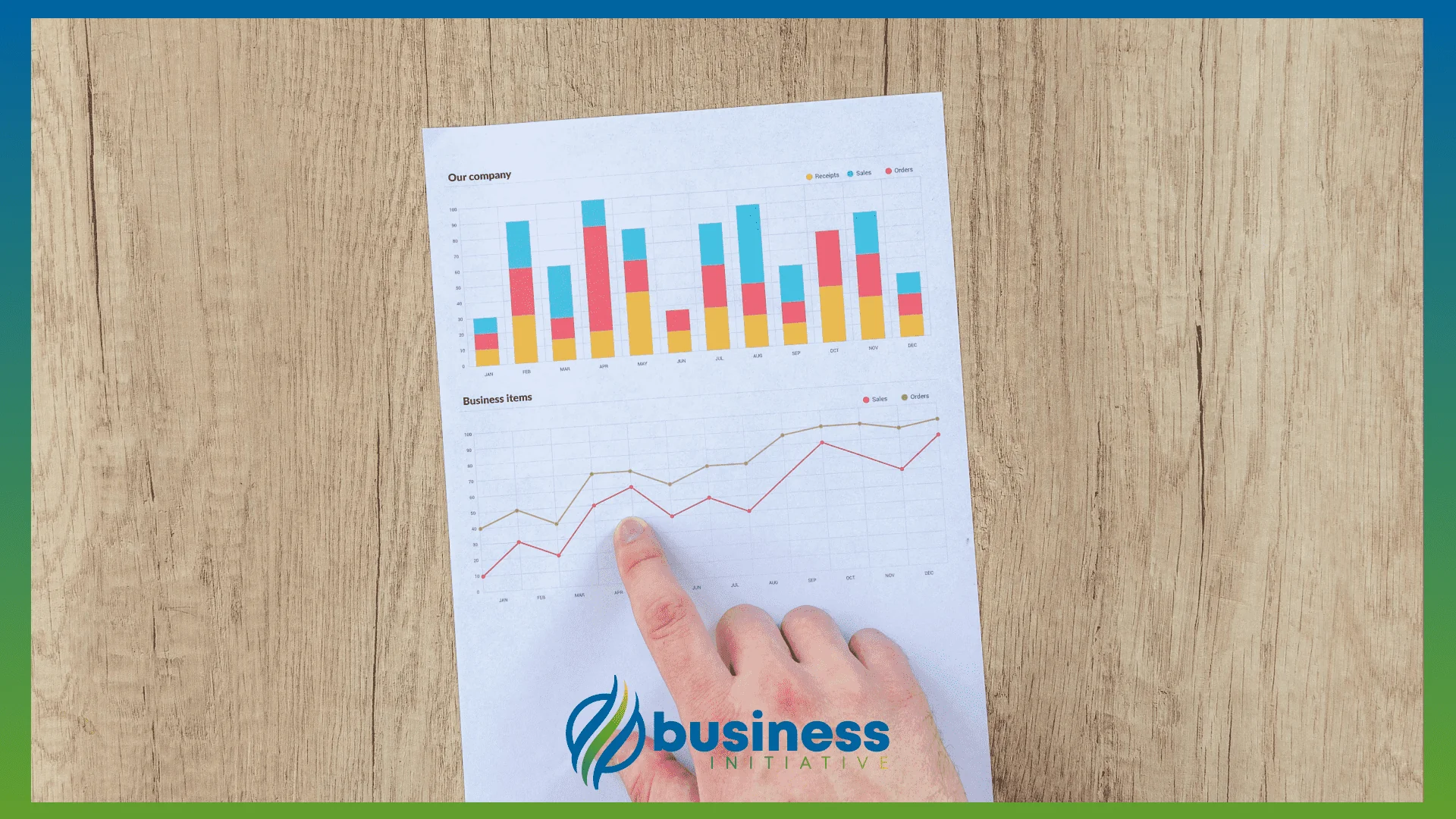
This quarterly GDP growth predictor helps you forecast which states will experience the strongest economic growth, enabling proactive business planning based on projected performance rather than historical data alone.
Key Findings:
- Growth forecasts reveal future opportunities—states with projected 3%+ quarterly growth offer expanding markets
- Trend analysis predicts performance—accelerating growth trends typically outperform stable or decelerating trends
- Economic cycles affect forecasts—understanding cycle phases helps time market entry optimally
- Forecast confidence varies by state—narrow confidence intervals indicate more reliable projections
- Proactive positioning beats reactive moves—early positioning in high-growth forecast states provides competitive advantages
What This Means for Your Business:
Understanding growth forecasts helps you make proactive location decisions based on projected performance. States with strong growth forecasts offer expanding markets with increasing opportunities, while states with weak forecasts may face economic challenges. Using forecasts enables you to position your business in expanding markets before they become saturated.
Practical Applications:
- Proactive Planning: Use growth forecasts to make location decisions based on projected performance
- Economic Cycle Planning: Time market entry based on cycle phases for optimal timing
- Risk Management: Consider forecast confidence intervals to assess reliability
- Competitive Advantage: Early positioning in high-growth forecast states provides advantages
Next Steps:
- Review the growth forecasts and identify states with projected growth matching your business model
- Assess forecast reliability using confidence intervals
- Analyze economic cycle phases to time market entry
- Compare forecasts to historical performance to identify acceleration
- Consult with Business Initiative for expert guidance on state registration and market entry
By leveraging this predictor, you can position your business in states with projected growth that maximizes your success and supports long-term expansion.
Ready to take action based on this predictor?
Now that you know which states are projected to experience the strongest economic growth, it’s time to make proactive location decisions.
Next Steps:
-
Explore the Predictor: Use this forecasting tool to analyze projected quarterly GDP growth for all 50 states. Identify states with growth forecasts that align with your business model and timing strategy.
- Compare State Statistics: Use our state-specific business formation statistics to understand entrepreneurial activity levels:
- State Statistics Overview
- Explore business formation data by state to see where entrepreneurs are most active
-
Plan Your Market Entry: Once you’ve identified states with strong growth forecasts, Business Initiative can help you register your business with expert guidance on state requirements, tax optimization, and compliance.
- Validate Your Forecast: Combine growth forecasts with industry-specific statistics to validate market opportunity before committing to a location.
Business Initiative offers expert services to help you leverage this predictor:
- State Registration Services: Get expert guidance on registering in states with strong growth forecasts that maximize your market opportunity
- Tax Optimization: Understand how state selection impacts your tax obligations based on projected growth
- Market Analysis: Combine growth forecasts with industry statistics for comprehensive market validation
- Strategic Planning: Work with our team to develop a location strategy based on growth forecast insights
For personalized advice, schedule a consultation with Business Initiative or reach out through our contact form.
Explore more by subscribing to The Initiative Newsletter or following us on X for the latest insights.