


When establishing or maintaining a corporation, one of the most critical requirements is appointing a registered agent.
This comprehensive guide will explore the vital role of registered agents in corporate operations, their legal responsibilities, and how to choose the right one for your corporation.
We’ll provide practical insights and expert tips to help you make informed decisions about your corporation’s registered agent needs.
 Key Takeaways
- Legal requirement: Every corporation must maintain a registered agent in each state where it conducts business.
- Key responsibilities: Registered agents receive legal documents, government correspondence, and official notices on your behalf.
- Consider professional services: Professional registered agents provide privacy, reliability, and compliance support.
- Maintain availability: Your registered agent must be available during standard business hours to receive documents.
- Plan for multi-state: If you operate in multiple states, you'll need a registered agent in each one.
 Table of Contents
What is a Corporate Registered Agent?
Definition: “A registered agent (also known as a statutory agent or agent for service of process) is a designated individual or entity responsible for receiving legal documents, government correspondence, and official notices on behalf of your corporation.”
The role of a registered agent is particularly crucial for corporations due to their more complex legal and regulatory requirements compared to other business structures.
For example, when Walmart Corporation faced a class-action lawsuit in 2016, their registered agent played a vital role in properly receiving and processing the legal documents, ensuring the corporation could respond appropriately and within required timeframes.
Legal Requirements for Corporate Registered Agents
Every corporation must maintain a registered agent in each state where it conducts business.
The requirements are typically more stringent for corporations than other business structures due to their public nature and shareholder responsibilities.
Key requirements include:
- Physical street address in the state of registration (P.O. boxes not accepted)
- Available during standard business hours (9am-5pm, Monday-Friday)
- Authorized to receive legal documents and official correspondence
- Maintain accurate records of all received documents
- Prompt communication with corporate officers
Can a Corporate Officer Serve as Registered Agent?
While it’s legally possible for a corporate officer to serve as the registered agent, there are several important considerations:
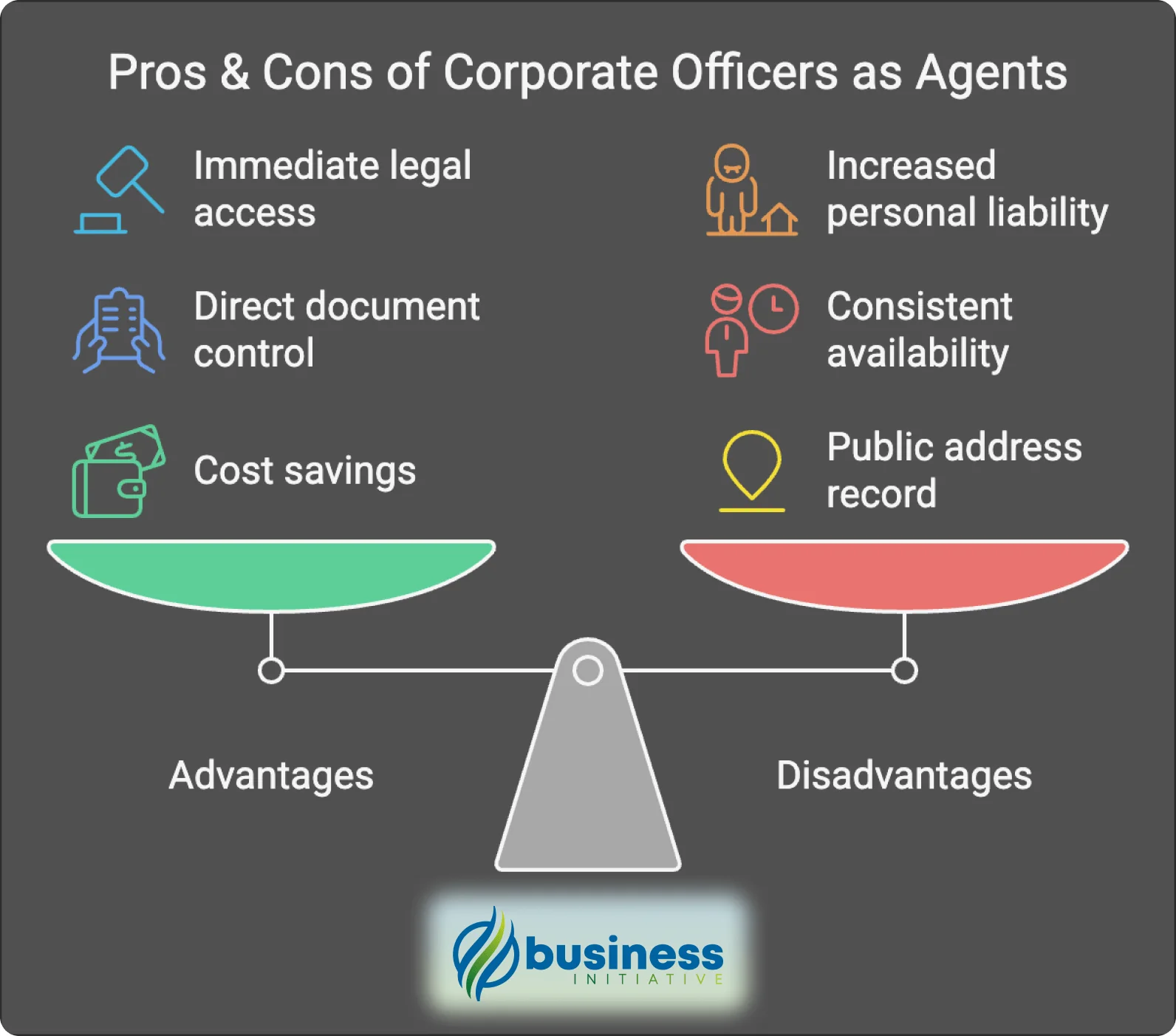
Advantages:
- Cost savings
- Direct control over document receipt
- Immediate access to legal notices
Disadvantages:
- Personal address becomes public record
- Must maintain consistent availability
- Increased personal liability
- May complicate multi-state operations
- Risk of missed documents during business travel or vacation
Responsibilities of a Corporate Registered Agent
A registered agent’s duties for corporations include:

1. Legal Document Management
- Receiving service of process for lawsuits
- Handling subpoenas and court notices
- Processing regulatory compliance documents
- Managing shareholder communications
2. Government Communications
- Annual report notifications
- Tax correspondence
- Corporate compliance notices
- State-specific regulatory updates
3. Corporate Compliance
- Maintaining official corporate records
- Tracking filing deadlines
- Ensuring timely response to legal notices
- Coordinating with corporate counsel
Benefits of Professional Registered Agent Services
Professional registered agent services offer several advantages for corporations:
1. Privacy Protection
- Shield corporate officers’ personal addresses
- Maintain confidentiality of legal proceedings
- Protect sensitive corporate information
- Manage public records professionally
2. Multi-State Compliance
- Consistent representation across jurisdictions
- Standardized document handling procedures
- Unified communication channels
- Simplified multi-state management
3. Risk Management
- Reliable document processing
- Immediate notification systems
- Compliance monitoring
- Audit trail maintenance
4. Operational Efficiency
- Centralized document management
- Professional document scanning and forwarding
- Online access to important notices
- Automated compliance reminders
Leading Corporate Registered Agent Services
Several companies specialize in providing registered agent services for corporations:
1. CT Corporation
- Industry leader with over 125 years of experience
- Comprehensive compliance services
- Global reach for international corporations
- Advanced technology platform
2. CSC Global
- Extensive corporate service experience
- Specialized public company support
- International registered agent services
- Integrated compliance solutions
3. National Registered Agents, Inc. (NRAI)
- Nationwide coverage
- Dedicated corporate support teams
- Real-time document access
- Compliance management tools
4. InCorp Services
- Competitive pricing
- Online document management
- Multi-state service packages
- Corporate compliance monitoring
Selecting the Right Registered Agent for Your Corporation
Consider these factors when choosing a registered agent:

1. Experience and Reliability
- Track record with corporations
- Industry reputation
- Customer service quality
- Technology infrastructure
2. Service Coverage
- Geographic presence
- Service scope
- Additional corporate services
- Emergency support availability
3. Technology and Accessibility
- Online document access
- Real-time notifications
- Integration capabilities
- Mobile accessibility
4. Cost Structure
- Base service fees
- Additional service costs
- Multi-state pricing
- Volume discounts
Changing Your Corporation’s Registered Agent
The process for changing registered agents requires:
1. Board Approval
- Document the decision
- Obtain necessary signatures
- Update corporate records
2. State Filings
- Submit change forms
- Pay required fees
- Update registered office address
- Notify relevant authorities
3. Transition Planning
- Coordinate timing
- Transfer pending matters
- Update service providers
- Maintain document continuity
Best Practices for Working with Registered Agents
Maximize the value of your registered agent relationship:
1. Regular Communication
- Establish clear protocols
- Define escalation procedures
- Schedule periodic reviews
- Maintain updated contact information
2. Document Management
- Implement tracking systems
- Maintain digital copies
- Create response procedures
- Archive important notices
3. Compliance Monitoring
- Review state requirements
- Track filing deadlines
- Monitor regulatory changes
-
Conduct periodic audits
What is a registered agent for a corporation?
A registered agent is a designated individual or entity responsible for receiving legal documents, government correspondence, and official notices on behalf of your corporation.
Learn More...
Also known as a statutory agent or agent for service of process.
Required by law in every state where your corporation conducts business.
Ensures your corporation properly receives and can respond to legal and regulatory matters.
Plays a critical role in corporate compliance and legal protection.
What are the legal requirements for a corporate registered agent?
Requirements include having a physical street address in the state, being available during business hours, and being authorized to receive legal documents.
Learn More...
P.O. boxes are not accepted—a physical street address is required.
The agent must be available during standard business hours (9am-5pm, Monday-Friday).
They must maintain accurate records and promptly communicate with corporate officers.
Requirements are typically more stringent for corporations due to shareholder responsibilities.
Can a corporate officer serve as the registered agent?
Yes, a corporate officer can legally serve as registered agent, but there are drawbacks including personal address becoming public record and availability requirements.
Learn More...
Advantages include cost savings and direct control over document receipt.
Disadvantages include privacy concerns, consistent availability requirements, and complications for multi-state operations.
Risk of missed documents during business travel or vacation.
Many corporations prefer professional registered agent services to avoid these issues.
What are the benefits of using a professional registered agent service?
Benefits include privacy protection, reliable document handling, compliance support, multi-state capabilities, and professional expertise.
Learn More...
Your personal address stays off public records.
Professional services ensure consistent availability and prompt document handling.
They often provide compliance tracking, deadline reminders, and expert support.
Simplifies operations for corporations doing business in multiple states.
How do I change my corporation's registered agent?
File a change of registered agent form with your state, ensure continuity of service, update your corporate records, and notify relevant parties.
Learn More...
Each state has specific forms and procedures for changing registered agents.
Ensure there's no gap in coverage during the transition to avoid compliance issues.
Update your corporate bylaws and official records to reflect the change.
Notify your new agent and confirm they're prepared to receive documents.
In Summary…
A reliable registered agent is crucial for your corporation’s legal compliance and operational efficiency. After the agent is appointed, continue with creating effective corporate bylaws.
Whether you choose a professional service or designate an internal representative, ensuring proper management of this role is essential for corporate success.
Don’t risk your corporation’s standing…
Invest in a professional registered agent service to protect your interests and ensure seamless compliance with state regulations.
Ready to establish or update your corporation’s registered agent?
Schedule a consultation with our experts today!